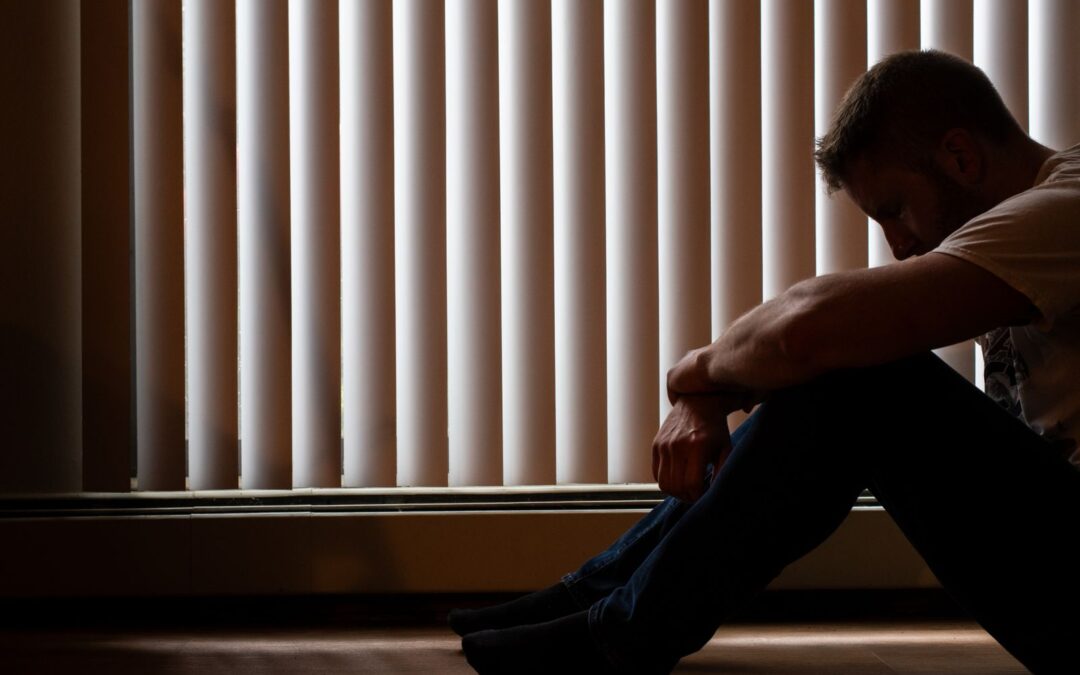
Coping with uncertainty has become a daily skill lately. Are you feeling the oddness in the air as much as I am? It is hard to put a finger on, but the world seems to be changing at a pace that is difficult to absorb. Politics, human rights, the climate, the economy, education — it can feel as though every time you turn around, something else has shifted underfoot.

Coping with uncertainty at this scale is its own skill, and most of us were never taught it.
Why Coping With Uncertainty Is So Tiring
Your nervous system is built to respond to threat, act, and then stand down. What it is not built for is threat that never resolves — a steady drip of things that matter, that you cannot influence, arriving faster than you can process them.
So the system stays half-activated. That is why the tiredness does not feel like ordinary tiredness, and why rest does not fix it. You are not being fragile. You are running a stress response with no off switch.
The part nobody names
There is also grief in this, and it often goes unnamed because it does not attach to a person. Grief for a version of the future you had assumed, for a sense of stability you had taken as given. It is real, and it behaves like grief — it comes in waves and it does not respond to being argued with.
What actually helps
- Contain the intake. Not avoidance — a boundary. Choose when and how long you read the news, and stop scrolling it in bed. Staying informed and staying immersed are not the same thing.
- Sort by what you can affect. Write down what is worrying you, then split it into what you can influence and what you cannot. Give your energy to the first column. The second column is not yours to carry.
- Do something small and concrete. Anxiety about large problems responds far better to a specific act — volunteering, giving, voting, helping one person — than to more thinking.
- Protect the ordinary. Meals, sleep, movement, the people you like. These sound trivial against world events and they are exactly what keeps you able to function.
- Talk to someone in person. Discussing it online tends to escalate. Discussing it with a person tends to settle.
- Let uncertainty be uncertain. Much anxiety is the attempt to think your way to a guarantee. There is not one available, and the search itself is what exhausts you.
When it has become more than stress
Watch for the point where it stops being about the world and starts being about your life — sleep that does not recover, difficulty concentrating on ordinary tasks, avoiding people, a persistent sense of dread that no longer needs a headline to trigger it.
That is anxiety, and it responds well to treatment. Being upset about genuinely upsetting events is not a disorder. Being unable to function is worth getting help with.
A reasonable response
It is worth saying plainly: feeling unsettled by an unsettled world is not a malfunction. The goal is not to stop caring, or to reach a state of calm that the facts do not support. It is to stay engaged with what matters to you without being flooded by it — to carry it, rather than be carried off by it.
Getting started
If the unease has become constant, you can read more about anxiety therapy or request a free 15-minute consultation.